Stop Staring at a Blank Page: The Blog Post Planner Template
Every content creator knows the specific dread of a blank calendar. You have the ambition to grow your brand, but the logistics of content planning—organizing topics, tracking SEO keywords, and maintaining a consistent schedule—often feel heavier than the writing itself. While digital tools are useful, there is a tactile clarity that comes from putting pen to paper. This is precisely where a dedicated Blog Post Planner becomes an essential asset for creators, entrepreneurs, and small business owners. It isn't just a notebook; it is a structured system designed to transform chaotic ideas into a coherent content strategy.
The Anatomy of a Professional KDP Interior
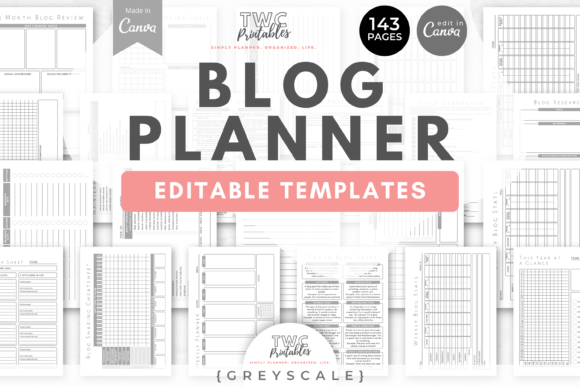
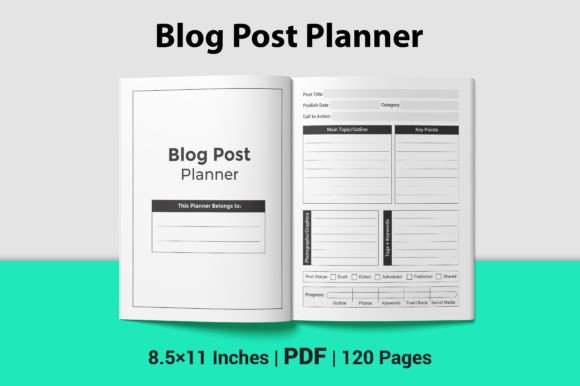
When we talk about the "visual characteristics" of a Blog Post Planner Template, we aren't discussing a fancy display font or intricate graphic design. Instead, the appeal lies in the functional design—the invisible architecture that makes the planner usable. A high-quality interior, such as the one described here with dimensions of 8.5x11 inches, prioritizes legibility and workflow above all else. The "personality" of these pages is professional, clean, and uncluttered. It is the modern typography equivalent of a tidy desk.
The style relies on a strong visual hierarchy. You will typically find a mix of sans serif fonts for headers to ensure immediate recognition, paired with ample line spacing for the actual writing areas. The overall appeal is utilitarian but aesthetically pleasing. It avoids the clutter of script fonts or handwritten fonts which, while beautiful, can hinder the actual planning process. Instead, it uses a premium font strategy that focuses on high readability. The layout includes specific zones for brainstorming, outlining, and tracking metrics, ensuring that the user doesn't just write, but plans with intent.
Why Physical Planning Enhances Brand Consistency
In a world dominated by screens, the act of writing by hand engages the brain differently. For a marketer or brand strategist, using a Blog Post Planner helps cement the brand identity. When you physically map out your content pillars in a dedicated planner, you are more likely to spot gaps in your strategy. This physical medium acts as a bridge between your creative thoughts and your digital execution.
This tool is particularly valuable for those involved in self-publishing on platforms like Amazon KDP. The interior design of the planner is print-ready, meaning the margins, bleed (or lack thereof), and file formats (PDF, AI, EPS, JPG) are optimized for the printer's specifications. This eliminates the technical headaches often associated with editorial design. You don't need to be a graphic designer to produce a professional product; the template handles the technical design assets required for a successful upload.
Furthermore, the consistency of the layout encourages consistency in your workflow. Just as a strong serif font conveys authority in a book, a structured planner conveys professionalism in your business operations. It helps in maintaining a regular posting schedule, which is the cornerstone of audience engagement and SEO performance.
Practical Application for Creators and Entrepreneurs
The versatility of a Blog Post Planner Interior extends beyond simple blogging. It serves as a central hub for content creators across various niches. A small business owner might use it to plan product launches alongside promotional posts. A lifestyle blogger might map out seasonal themes months in advance. The structure supports the planning of diverse content types, from long-form articles to social media graphics schedules.
For those looking to launch this as a product on Amazon KDP, the benefits are immediate. The dimensions (8.5x11 inches) offer plenty of space for writing, which is a major selling point for users who find A5 planners too restrictive. The availability of 100, 110, or 120 pages allows for customization based on the intended price point or usage duration (quarterly vs. annual). Since the files are 100% ready for Amazon KDP uploading, you bypass the steep learning curve of InDesign or Illustrator technicalities.
Choosing the Right Template for Your Project
When evaluating a Blog Post Planner Template, look for the "bones" of the design rather than just the cover. The value lies in the interior layout. Does it offer enough space for notes? Is the typography neutral enough to appeal to a broad audience? A good template acts as a creative font for your thoughts—it should get out of the way and let the content shine.
Consider the flow of the pages. A well-designed planner will guide the user from broad strategy (monthly goals) down to the granular details (individual post checklists). This mirrors the principles of good web design and packaging design, where the user experience is paramount. By utilizing a commercial font style that is universally understood, the planner ensures that your focus remains on the strategy, not deciphering the interface.
Ultimately, a Blog Post Planner is more than just paper; it is a commitment to your craft. Whether you are a hobbyist documenting a journey or a publisher managing a portfolio of sites, having a physical roadmap ensures that you never lose sight of your destination.